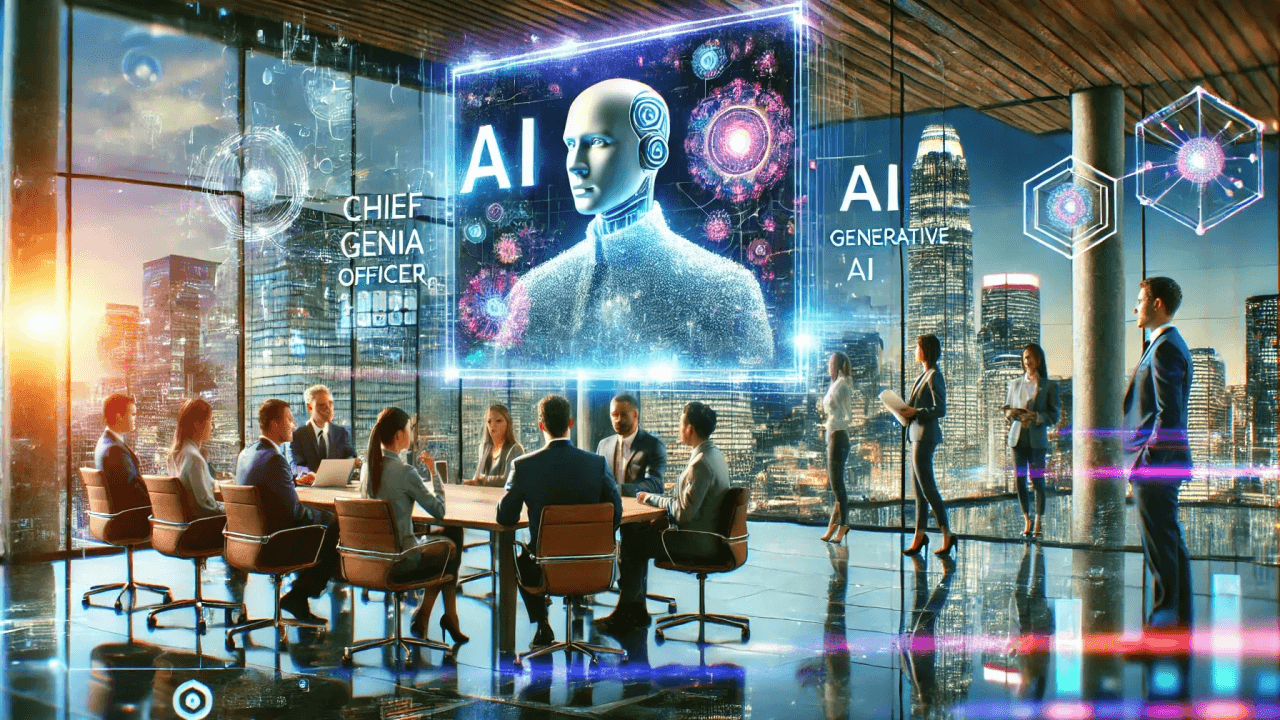
The Emerging Role of the Chief GenIA Officer: Architect of Transformation through Generative AI
The Emerging Role of the Chief GenIA Officer: Architect of Transformation through Generative AI
The Emerging Role of the Chief GenIA Officer: Architect of Transformation through Generative AI
The digital transformation is accelerating, and at the heart of this revolution, a new role is emerging: that of the Chief GenIA Officer (CGIO). This strategic role embodies the necessity for companies to adopt generative AI (GenIA) as a key lever for their growth and competitiveness.
The role of the Chief GenIA Officer
The Chief GenIA Officer is responsible for the strategy, implementation, and ethics surrounding generative artificial intelligence tools within organizations. As the architect of AI projects, he or she ensures that the deployed solutions provide real added value while being aligned with the company's strategic objectives. Managing risks related to ethics and data security is also at the core of their mission.
One of the main strengths of this role is the ability to facilitate innovation through concrete applications: content creation, development of new services and products, enhancement of customer experience, or optimization of internal processes. Pioneering companies like Google, Microsoft, and OpenAI have shown the importance of placing AI at the center of their strategy, by creating dedicated positions for its oversight and development.
Required skills for this role
A Chief GenIA Officer must possess a unique set of skills combining an in-depth understanding of AI technologies and a strategic vision. Among the essential skills:
Mastery of generative AI algorithms (NLP, neural networks, deep learning).
Knowledge of data science and AI training models.
Heightened sensitivity to AI ethics and regulation regarding data protection.
Ability to manage AI projects in an agile manner.
Strong business orientation to identify market opportunities.
Training pathway to becoming a CGIO
To hold this position, a solid background in engineering sciences or data science is often required, complemented by training in digital strategy or innovation management. Specialized programs like Masters in Artificial Intelligence from top schools (HEC Paris, MIT, Stanford) or certifications in machine learning are preferred pathways to specialize in this field. Industry leaders also encourage hybrid pathways combining MBA and technical expertise, to better understand business issues.
Industry sectors and opportunities
The companies most advanced in adopting this role are those that invest heavily in digital transformation: technology, finance, healthcare, retail. In the coming years, it is expected that 75% of Fortune 500 companies will have a Chief GenIA Officer to oversee their AI projects. In sectors such as healthcare (automated diagnostics, biomedical research) or finance (AI portfolio management), this role is set to become essential to maintain a competitive edge.
The challenge of AI ethics
Finally, a crucial aspect of the CGIO's role is the ethical oversight of AI projects. Algorithmic biases, risks of discrimination, and environmental impacts related to the computing resources used to train models are all issues that the CGIO must address. Companies like IBM and Salesforce have already established ethical committees to monitor the social impact of their AI technologies.
In conclusion
The Chief GenIA Officer is the architect of a new technological era. This role, although still emerging, is becoming essential for companies that wish to fully harness the potential of generative AI while integrating an ethical and responsible dimension. As AI continues to redefine the way companies operate, this position is proving to be a crucial strategic lever to remain competitive in the global market.
However, the Chief GenIA Officer is only the first step in a broader transformation. By 2030, new jobs such as Chief AI Ethics Officer, Head of Virtual Environments, or even Designer of Emotional Intelligences could emerge, responding to the ever-growing needs for regulation, management of societal impact, and emotional integration in human-machine interactions. These new roles, at the intersection of technology, ethics, and creativity, will shape the organizations of the future.
The future of work is therefore not limited to AI, but to a coevolution between humans and machines, requiring hybrid skills and constant reinvention of business models. Today's pioneers, like the Chief GenIA Officer, are paving the way for a new generation of leaders in digital transformation.
Thomas Rozier
Chairman – Laroze Partners Executive Search
Want to structure your strategic recruitments or anticipate the transformations in your sector?
Also read:
The digital transformation is accelerating, and at the heart of this revolution, a new role is emerging: that of the Chief GenIA Officer (CGIO). This strategic role embodies the necessity for companies to adopt generative AI (GenIA) as a key lever for their growth and competitiveness.
The role of the Chief GenIA Officer
The Chief GenIA Officer is responsible for the strategy, implementation, and ethics surrounding generative artificial intelligence tools within organizations. As the architect of AI projects, he or she ensures that the deployed solutions provide real added value while being aligned with the company's strategic objectives. Managing risks related to ethics and data security is also at the core of their mission.
One of the main strengths of this role is the ability to facilitate innovation through concrete applications: content creation, development of new services and products, enhancement of customer experience, or optimization of internal processes. Pioneering companies like Google, Microsoft, and OpenAI have shown the importance of placing AI at the center of their strategy, by creating dedicated positions for its oversight and development.
Required skills for this role
A Chief GenIA Officer must possess a unique set of skills combining an in-depth understanding of AI technologies and a strategic vision. Among the essential skills:
Mastery of generative AI algorithms (NLP, neural networks, deep learning).
Knowledge of data science and AI training models.
Heightened sensitivity to AI ethics and regulation regarding data protection.
Ability to manage AI projects in an agile manner.
Strong business orientation to identify market opportunities.
Training pathway to becoming a CGIO
To hold this position, a solid background in engineering sciences or data science is often required, complemented by training in digital strategy or innovation management. Specialized programs like Masters in Artificial Intelligence from top schools (HEC Paris, MIT, Stanford) or certifications in machine learning are preferred pathways to specialize in this field. Industry leaders also encourage hybrid pathways combining MBA and technical expertise, to better understand business issues.
Industry sectors and opportunities
The companies most advanced in adopting this role are those that invest heavily in digital transformation: technology, finance, healthcare, retail. In the coming years, it is expected that 75% of Fortune 500 companies will have a Chief GenIA Officer to oversee their AI projects. In sectors such as healthcare (automated diagnostics, biomedical research) or finance (AI portfolio management), this role is set to become essential to maintain a competitive edge.
The challenge of AI ethics
Finally, a crucial aspect of the CGIO's role is the ethical oversight of AI projects. Algorithmic biases, risks of discrimination, and environmental impacts related to the computing resources used to train models are all issues that the CGIO must address. Companies like IBM and Salesforce have already established ethical committees to monitor the social impact of their AI technologies.
In conclusion
The Chief GenIA Officer is the architect of a new technological era. This role, although still emerging, is becoming essential for companies that wish to fully harness the potential of generative AI while integrating an ethical and responsible dimension. As AI continues to redefine the way companies operate, this position is proving to be a crucial strategic lever to remain competitive in the global market.
However, the Chief GenIA Officer is only the first step in a broader transformation. By 2030, new jobs such as Chief AI Ethics Officer, Head of Virtual Environments, or even Designer of Emotional Intelligences could emerge, responding to the ever-growing needs for regulation, management of societal impact, and emotional integration in human-machine interactions. These new roles, at the intersection of technology, ethics, and creativity, will shape the organizations of the future.
The future of work is therefore not limited to AI, but to a coevolution between humans and machines, requiring hybrid skills and constant reinvention of business models. Today's pioneers, like the Chief GenIA Officer, are paving the way for a new generation of leaders in digital transformation.
Thomas Rozier
Chairman – Laroze Partners Executive Search
Want to structure your strategic recruitments or anticipate the transformations in your sector?
Also read:
The digital transformation is accelerating, and at the heart of this revolution, a new role is emerging: that of the Chief GenIA Officer (CGIO). This strategic role embodies the necessity for companies to adopt generative AI (GenIA) as a key lever for their growth and competitiveness.
The role of the Chief GenIA Officer
The Chief GenIA Officer is responsible for the strategy, implementation, and ethics surrounding generative artificial intelligence tools within organizations. As the architect of AI projects, he or she ensures that the deployed solutions provide real added value while being aligned with the company's strategic objectives. Managing risks related to ethics and data security is also at the core of their mission.
One of the main strengths of this role is the ability to facilitate innovation through concrete applications: content creation, development of new services and products, enhancement of customer experience, or optimization of internal processes. Pioneering companies like Google, Microsoft, and OpenAI have shown the importance of placing AI at the center of their strategy, by creating dedicated positions for its oversight and development.
Required skills for this role
A Chief GenIA Officer must possess a unique set of skills combining an in-depth understanding of AI technologies and a strategic vision. Among the essential skills:
Mastery of generative AI algorithms (NLP, neural networks, deep learning).
Knowledge of data science and AI training models.
Heightened sensitivity to AI ethics and regulation regarding data protection.
Ability to manage AI projects in an agile manner.
Strong business orientation to identify market opportunities.
Training pathway to becoming a CGIO
To hold this position, a solid background in engineering sciences or data science is often required, complemented by training in digital strategy or innovation management. Specialized programs like Masters in Artificial Intelligence from top schools (HEC Paris, MIT, Stanford) or certifications in machine learning are preferred pathways to specialize in this field. Industry leaders also encourage hybrid pathways combining MBA and technical expertise, to better understand business issues.
Industry sectors and opportunities
The companies most advanced in adopting this role are those that invest heavily in digital transformation: technology, finance, healthcare, retail. In the coming years, it is expected that 75% of Fortune 500 companies will have a Chief GenIA Officer to oversee their AI projects. In sectors such as healthcare (automated diagnostics, biomedical research) or finance (AI portfolio management), this role is set to become essential to maintain a competitive edge.
The challenge of AI ethics
Finally, a crucial aspect of the CGIO's role is the ethical oversight of AI projects. Algorithmic biases, risks of discrimination, and environmental impacts related to the computing resources used to train models are all issues that the CGIO must address. Companies like IBM and Salesforce have already established ethical committees to monitor the social impact of their AI technologies.
In conclusion
The Chief GenIA Officer is the architect of a new technological era. This role, although still emerging, is becoming essential for companies that wish to fully harness the potential of generative AI while integrating an ethical and responsible dimension. As AI continues to redefine the way companies operate, this position is proving to be a crucial strategic lever to remain competitive in the global market.
However, the Chief GenIA Officer is only the first step in a broader transformation. By 2030, new jobs such as Chief AI Ethics Officer, Head of Virtual Environments, or even Designer of Emotional Intelligences could emerge, responding to the ever-growing needs for regulation, management of societal impact, and emotional integration in human-machine interactions. These new roles, at the intersection of technology, ethics, and creativity, will shape the organizations of the future.
The future of work is therefore not limited to AI, but to a coevolution between humans and machines, requiring hybrid skills and constant reinvention of business models. Today's pioneers, like the Chief GenIA Officer, are paving the way for a new generation of leaders in digital transformation.
Thomas Rozier
Chairman – Laroze Partners Executive Search
Want to structure your strategic recruitments or anticipate the transformations in your sector?
Also read:
Read also




Read also
CONTACT
Let's work together.
At Laroze Partners, we believe that recruiting a leader is a strategic, foundational, and engaging act. That’s why we have turned it into an art of precision: listening, intuition, method. We offer customized support over time for a real impact in service of the success of your executive teams.
CONTACT
Let's work together.
At Laroze Partners, we believe that recruiting a leader is a strategic, foundational, and engaging act. That’s why we have turned it into an art of precision: listening, intuition, method. We offer customized support over time for a real impact in service of the success of your executive teams.
CONTACT
Let's work together.
At Laroze Partners, we believe that recruiting a leader is a strategic, foundational, and engaging act. That’s why we have turned it into an art of precision: listening, intuition, method. We offer customized support over time for a real impact in service of the success of your executive teams.